Blake Bennett · 9 October 2026
How AI Partnerships Are Transforming Remote Biology Lab Simulations in Eastern Europe
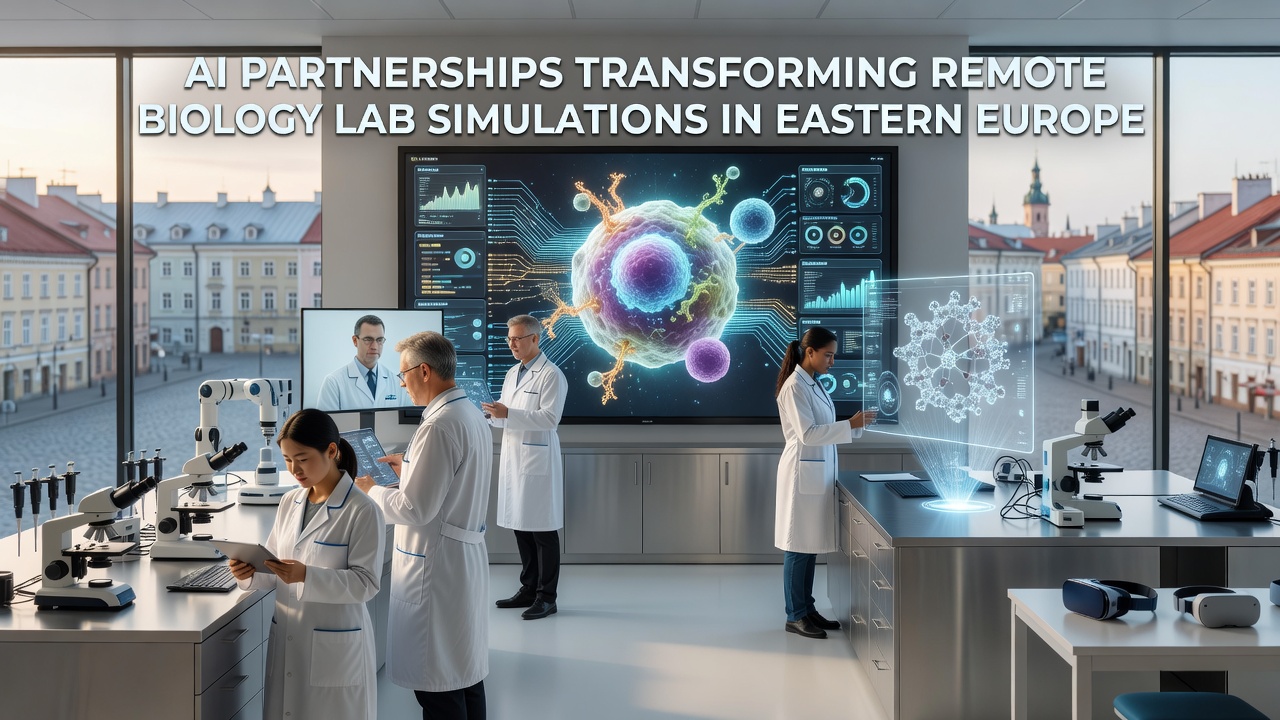
Universities across Eastern Europe have formed alliances with technology firms to integrate artificial intelligence into remote biology laboratory simulations, and these collaborations continue to expand access to advanced educational tools for students in the region. Data from the European Commission's 2025 digital education review indicates that institutions in Poland, Hungary, and Romania reported increased participation in virtual lab programs after implementing AI-driven platforms that adjust difficulty based on individual performance metrics. Partnerships between academic centers and companies specializing in machine learning allow simulations to model complex biological processes such as protein folding and cellular interactions with greater precision than earlier static models.
Expanding Access Through Regional Collaborations
Observers note that Eastern European universities often lack physical infrastructure for certain high-containment biology experiments, so remote simulations supported by AI fill that gap while maintaining standardized learning outcomes. A 2024 report from the OECD on digital learning environments highlights how joint projects involving institutions in the Czech Republic and Slovakia produced platforms that simulate genetic sequencing workflows, and these tools reached over 15,000 undergraduates in the first year of deployment. Partnerships typically involve shared data repositories where AI algorithms analyze student interactions to identify common misconceptions, then generate targeted feedback modules in real time.
Researchers at multiple universities documented measurable gains in conceptual understanding after students completed AI-guided sessions on topics including enzyme kinetics and microbial ecology. The reality is that these systems draw from large datasets collected across partner institutions, which helps refine predictive models and reduce errors in simulated experimental results. In October 2026, a scheduled regional summit organized by the EU4Digital initiative will review progress on cross-border data standards that support further integration of AI into biology education platforms.
Technological Mechanisms Driving Change
AI components within these simulations use reinforcement learning to adapt scenarios based on user decisions, and this approach creates branching pathways that mirror actual laboratory variability. Figures from a study published by the European Molecular Biology Laboratory reveal that students using adaptive simulations completed protocol troubleshooting tasks 40 percent faster than those relying on traditional video demonstrations. External partners contribute cloud computing resources that enable high-resolution 3D rendering of molecular structures without requiring local hardware upgrades at participating universities.
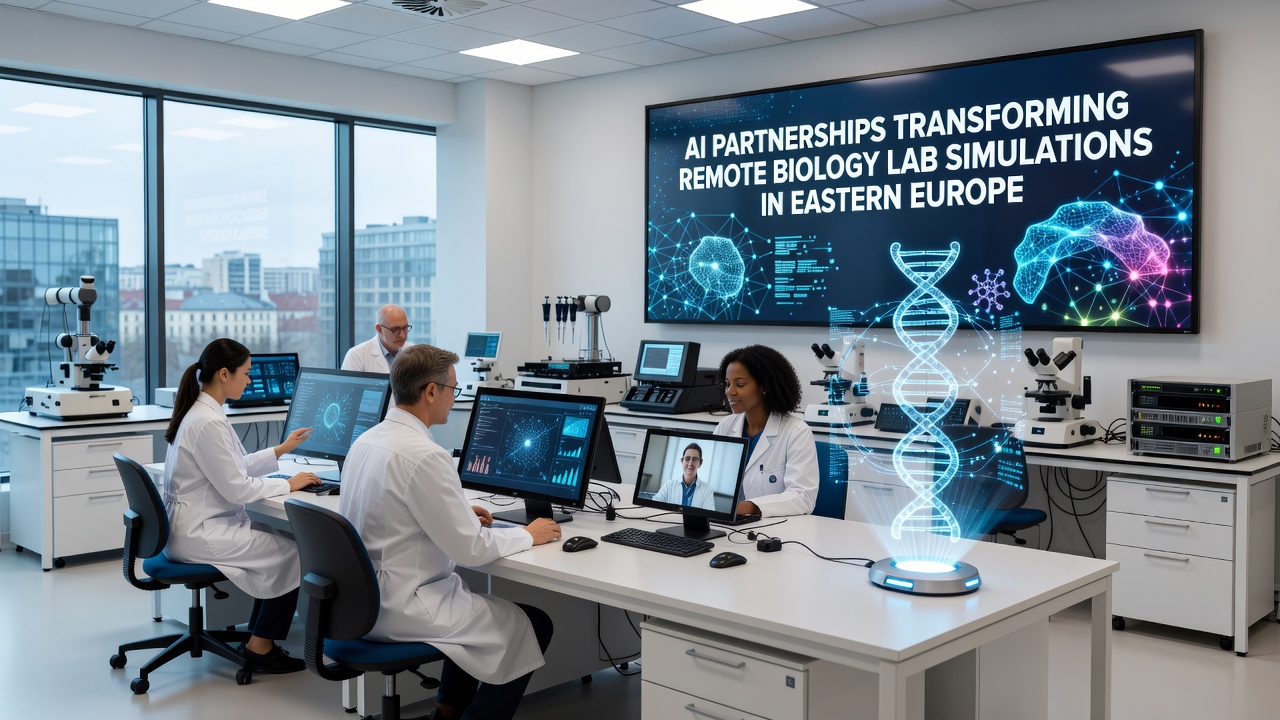
What's interesting is how natural language processing tools integrated into these platforms allow students to query simulation parameters in their native languages, which broadens participation in non-English speaking countries. Data indicates that Romanian and Bulgarian institutions recorded higher engagement rates after adding multilingual support to their shared simulation environments. Partnerships also incorporate quality assurance protocols developed with input from regulatory bodies such as the Australian Department of Education, ensuring that virtual experiments align with established curriculum benchmarks.
Measuring Educational Outcomes
Assessment frameworks developed through multi-institutional agreements track metrics including completion rates, error patterns, and knowledge retention over multiple semesters. Evidence suggests that AI-enhanced remote labs correlate with improved performance on standardized biology assessments administered across Eastern European networks. One case involved a consortium linking Hungarian and Lithuanian universities, where researchers tracked 2,500 students and found consistent increases in practical skill scores after exposure to personalized simulation sequences.
Those who've examined the datasets point out that AI partnerships reduce the time instructors spend on repetitive grading tasks, freeing resources for curriculum development. Government sources from Canada’s National Research Council have contributed guidelines on ethical data handling that partner organizations in Eastern Europe now apply when managing student interaction logs from biology simulations. These standards help maintain privacy while allowing aggregate analysis that improves model accuracy.
Future Developments and Regional Impact
Continued investment in AI infrastructure supports plans to incorporate real-time sensor data from physical labs into remote simulations, creating hybrid environments that blend virtual and actual experiments. Reports from the European Commission note that funding allocations for digital biology tools increased by 18 percent in the 2025 budget cycle, with emphasis on Eastern European applicants. Partnerships are expected to explore generative AI for creating custom experiment variants that address specific regional research priorities such as agricultural biotechnology.
Conclusion
AI partnerships continue reshaping remote biology lab simulations across Eastern Europe by delivering adaptive, data-informed learning experiences that address infrastructure limitations while meeting educational standards. Regional collaborations, supported by contributions from international bodies, provide the technical foundation for ongoing refinement of these platforms. As institutions prepare for upcoming reviews in October 2026, the focus remains on expanding access and validating outcomes through coordinated research efforts.